

In the volatile arena of decentralized finance, where billions flow through unproven code, the margin between profit and catastrophe often hinges on smart contract integrity. ChainGPT's Smart Contract Auditor emerges as a pivotal DeFi contract security AI, offering developers and yield farmers a rapid, AI-powered shield against the exploits that have drained over $3 billion from protocols in recent years. As ChainGPT (CGPT) trades at $0.0238, reflecting a modest 24-hour dip of -0.0261%, this tool underscores a strategic pivot toward proactive risk management in Web3.
Navigating DeFi's Vulnerability Landscape
DeFi's promise of permissionless innovation comes freighted with peril. Flash loan attacks, reentrancy flaws, and oracle manipulations have repeatedly exposed weak contracts, eroding user trust and capital. Traditional manual audits, while thorough, demand weeks and tens of thousands in fees, leaving projects racing to launch in a compressed bull cycle. Enter ChainGPT's AI DeFi risk tools: an auditor trained on vast Solidity datasets to dissect contracts with precision rivaling human experts, yet in minutes. It probes for vulnerabilities like integer overflows, access control gaps, and gas optimization pitfalls, delivering structured reports with security scores and remediation steps. This isn't hype; it's a conservative bulwark for builders who prioritize longevity over speed.
Supporting Ethereum, BNB Chain, Polygon, Arbitrum, and Avalanche, the auditor aligns with multichain realities, ensuring cross-protocol resilience. In a market where CGPT holds steady at $0.0238 after touching a 24-hour high of $0.0248, such tools signal maturity, rewarding protocols that audit rigorously before deployment.
Unpacking the Auditor's Core Mechanics
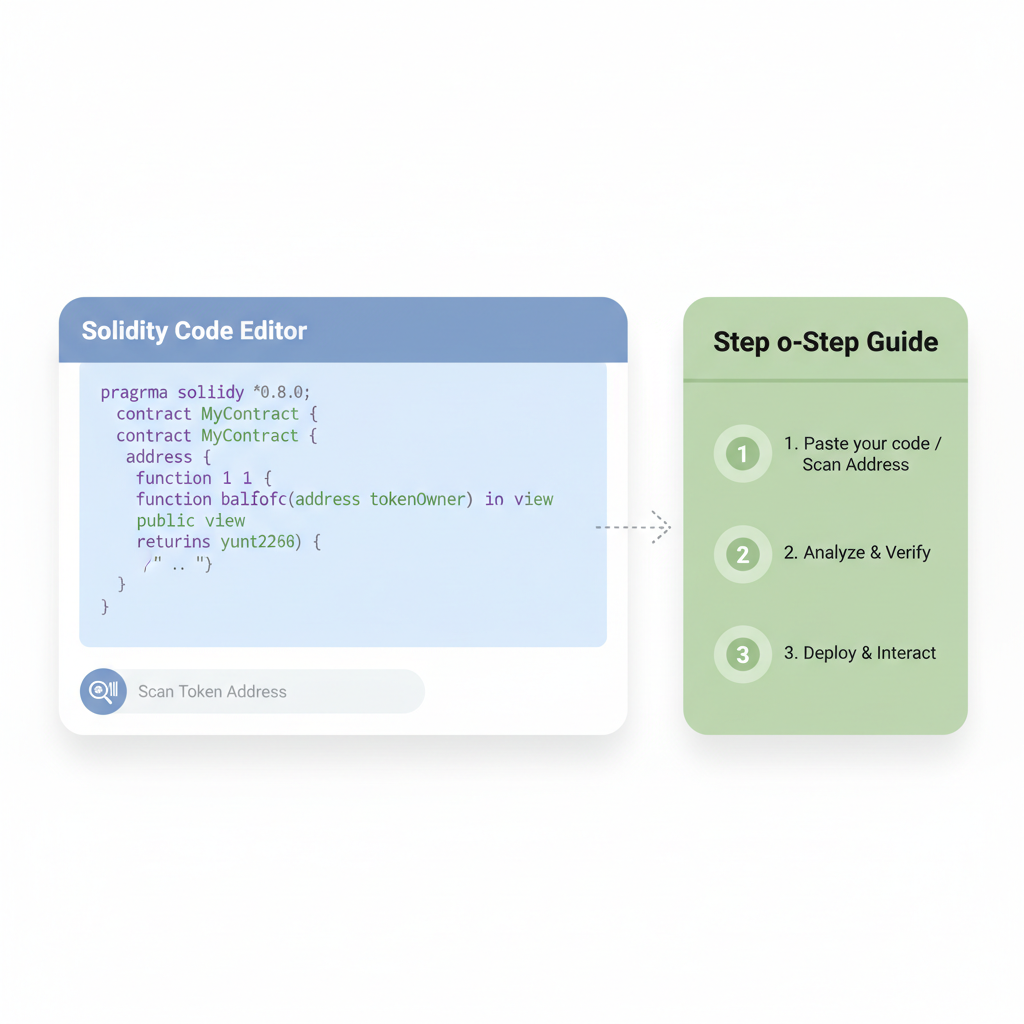
At its heart, ChainGPT's Smart Contract Auditor leverages advanced machine learning to simulate attack vectors and static analysis. Upload your Solidity code via the app at app. chaingpt. org or integrate through RESTful API and Node. js SDK for CI/CD pipelines. The AI scans for over 50 common issues, categorizing them by severity: critical, high, medium, low. Production-grade reports, enhanced in AI Hub V2, include line-specific annotations and compliance checks against standards like MiCA and SEC guidelines. Developers receive actionable fixes, such as swapping unsafe math libraries or tightening modifier logic.
Consider a typical yield farm contract: the auditor might flag an unchecked external call risking reentrancy, suggesting a checks-effects-interactions pattern. Gas inefficiencies, like redundant storage ops, get flagged for 20-30% savings. This depth, delivered in under two hours, democratizes elite security for indie devs and DAOs alike. As a veteran of bull cycles, I view this as essential for sustainable DeFi allocations, where unpatched code invites predatory funds.
Strategic Advantages for Risk-Averse Builders
For yield farmers and governance token holders, the ripple effects are profound. Secure contracts foster higher TVL, stable APYs, and resilient tokenomics. ChainGPT's tool slashes audit costs from $10,000 and to a fraction, enabling iterative testing during development sprints. Its multichain support future-proofs farms against liquidity fragmentation, a macro trend as layer-2s proliferate.
ChainGPT (CGPT) Price Prediction 2027-2032
Annual forecasts from current $0.0238 level, factoring in AI Smart Contract Auditor adoption for DeFi risk management, market cycles, and tech advancements
| Year | Minimum Price ($) | Average Price ($) | Maximum Price ($) | Potential Upside % (Avg from Current) |
|---|---|---|---|---|
| 2027 | $0.025 | $0.040 | $0.080 | +68% |
| 2028 | $0.035 | $0.070 | $0.150 | +194% |
| 2029 | $0.050 | $0.120 | $0.300 | +404% |
| 2030 | $0.080 | $0.220 | $0.500 | +824% |
| 2031 | $0.120 | $0.350 | $0.800 | +1,370% |
| 2032 | $0.180 | $0.550 | $1.200 | +2,210% |
Price Prediction Summary
ChainGPT (CGPT) shows strong long-term potential, with average prices projected to grow progressively from $0.04 in 2027 to $0.55 in 2032, driven by its AI-powered Smart Contract Auditor enhancing DeFi security. Bullish scenarios could see 50x gains by 2032 amid AI-crypto adoption, while bearish mins reflect market volatility.
Key Factors Affecting ChainGPT Price
- Widespread adoption of ChainGPT's AI Auditor for Solidity contracts across Ethereum, BNB Chain, Polygon, and more.
- Cost-effective, rapid audits reducing DeFi exploit risks and building user trust.
- Bullish market cycles post-2026 favoring AI-blockchain narratives and Web3 tools.
- Regulatory tailwinds like MiCA and SEC compliance via AI legal assistants.
- Tech upgrades in AI Hub V2, including production-grade security reports and API integrations.
- Market cap growth potential amid competition, with realistic progressive yearly gains.
Disclaimer: Cryptocurrency price predictions are speculative and based on current market analysis. Actual prices may vary significantly due to market volatility, regulatory changes, and other factors. Always do your own research before making investment decisions.
Embedded in ChainGPT's broader suite, including the Smart Contract Generator, it forms a full lifecycle toolkit. Generate, audit, deploy: a streamlined path that minimizes human error. In my 18 years investing through cycles, I've seen impatience breed blowups; tools like this instill discipline, turning DeFi from casino to compounder. With CGPT at $0.0238 amid low volatility, the platform's utility drives understated accumulation potential for patient holders.
Beyond speed, the auditor's API enables on-chain verification badges, boosting user confidence. Protocols displaying verified status attract capital faster, as seen in BeanBee's trust uplift via similar integrations. This strategic edge positions ChainGPT as a cornerstone for Web3 contract generator 2026 workflows, where AI augments rather than replaces builder acumen.
Real-world deployments reveal the auditor's edge in high-stakes environments. Yield farms on Polygon, prone to gas wars during peaks, benefit from its optimization flags, trimming deployment costs by up to 25%. Governance tokens, central to my allocation strategy, demand ironclad voting mechanisms; the tool's access control scans prevent delegate exploits that could sway DAOs. With ChainGPT (CGPT) at $0.0238, down slightly by -0.0261% over 24 hours from a high of $0.0248, this utility fortifies the token's role in a maturing ecosystem.
Hands-On Auditing Workflow
Integrating the ChainGPT smart contract auditor demands minimal friction, suiting solo developers or teams under deadline pressure. Its Node. js SDK slips into GitHub Actions for automated pre-deploy checks, flagging issues before mainnet risks materialize. RESTful endpoints allow custom dashboards, where protocols aggregate scores across forks. This automation aligns with conservative DeFi playbooks: test exhaustively, launch selectively.
Fortify DeFi Defenses: ChainGPT AI Smart Contract Audit Guide


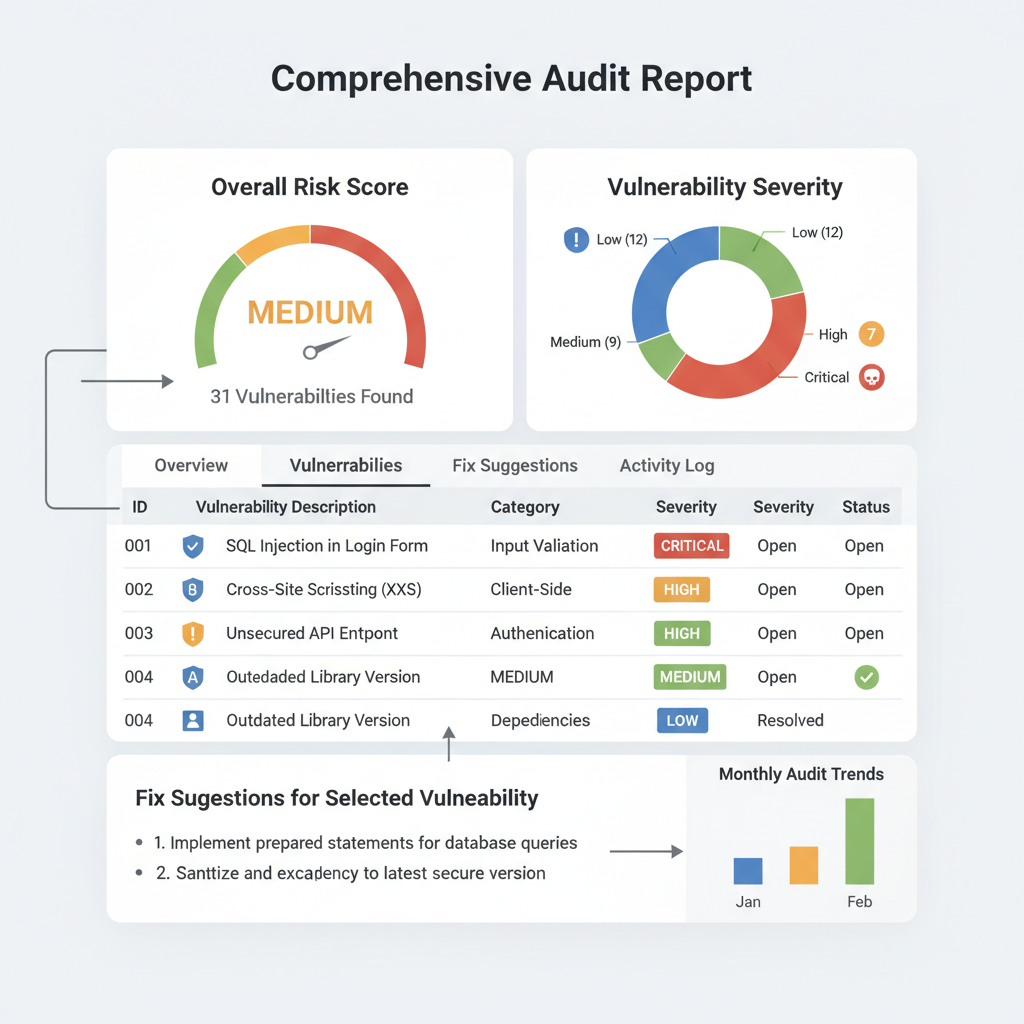
Post-audit, structured reports shine. Critical vulnerabilities headline with exploit probabilities; medium risks detail gas leaks. Compliance sections flag MiCA-relevant disclosures, vital as regulators circle Web3. I've advised farms to loop this into weekly sprints, catching regressions early. In bull cycles past, such rigor separated survivors from rubble.
Code-Level Insights and Fixes
Examine a common pitfall: reentrancy in token transfers. The auditor dissects it surgically, proposing battle-tested patterns.
Reentrancy Vulnerability and CEI Fix
One common vulnerability flagged by ChainGPT's Smart Contract Auditor is reentrancy in withdrawal functions, a conservative risk in DeFi protocols. The auditor detects unchecked external calls preceding state mutations, violating the checks-effects-interactions (CEI) pattern.
```solidity
// Vulnerable Withdrawal Function
// This example demonstrates a reentrancy vulnerability
contract VulnerableBank {
    mapping(address => uint256) public balances;

    function deposit() external payable {
        balances[msg.sender] += msg.value;
    }

    function withdraw() external {
        uint256 amount = balances[msg.sender];
        require(amount > 0);

        // Dangerous: External call before state update
        (bool success, ) = msg.sender.call{value: amount}("");
        require(success, "Transfer failed");

        // State update after external call - vulnerable to reentrancy
        balances[msg.sender] = 0;
    }
}
```
ChainGPT strategically recommends refactoring to the CEI pattern: perform checks, update state (effects), then execute external interactions. This mitigates reentrancy thoughtfully without overcomplicating the contract: ```solidity // Fixed Withdrawal Function (CEI Pattern) function withdraw() external { uint256 amount = balances[msg.sender]; require(amount > 0); // Effect: Update state before external call balances[msg.sender] = 0; // Interaction: Safe external call (bool success, ) = msg.sender.call{value: amount}(""); require(success, "Transfer failed"); } ``` This adjustment ensures robust risk management.
This snippet, typical in early farms, invites drains like the 2016 DAO hack redux. ChainGPT's AI not only spots it but quantifies impact: potential loss estimates based on TVL proxies. Remediation code deploys seamlessly, preserving logic while hardening defenses. For DeFi contract security AI, this precision rivals firms charging six figures, yet scales infinitely.
Multichain prowess extends to Arbitrum bridges, where sequencer risks lurk. Avalanche farms gain from sub-second scans, syncing with subnet speeds. As layer-2 TVL eclipses mainnet, tools blind to EVM forks falter; ChainGPT spans them, safeguarding fragmented liquidity pools central to yield strategies.
Manual Audit vs ChainGPT AI Auditor
| Time | Cost | Coverage | Chains Supported |
|---|---|---|---|
| Weeks | $10k+ | Partial | 1-5 |
| Minutes | $Low | Comprehensive | 5 |
Yield farmers reap indirect gains. Protocols with verified badges command premium APYs, drawing sticky capital. Stablecoin farms, my preferred low-volatility hold, thrive on unassailable peg mechanics; auditor's oracle checks preempt depegs. Governance tokens accrue value as TVL compounds securely, mirroring macro trends where security-first projects outlast hype machines.
Macro Positioning in 2026 DeFi
Looking ahead, ChainGPT's evolution via AI Hub V2 positions it as indispensable for Web3 contract generator 2026 stacks. Pairing auditor with generator yields end-to-end security: ideate, code, vet, deploy. Amid regulatory headwinds, its MiCA/SEC modules aid compliant token launches, a hedge for cross-Atlantic farms.
CGPT's stability at $0.0238, post a 24-hour low of $0.0231, reflects undervaluation for such depth. Patient builders accumulate here, betting on adoption as DeFi TVL rebounds. I've navigated cycles where tools like this presaged tenfold lifts; impatience erodes edges, discipline endures.
Ultimately, the Smart Contract Auditor reframes DeFi risk from inevitability to manageability. It empowers allocators to favor audited protocols, optimizing portfolios toward sustainable yields. In a space littered with cautionary tales, this AI DeFi risk tools suite carves a path for enduring prosperity.



No comments yet. Be the first to share your thoughts!