
Privacy-First AI Copilots for DeFi Liquidity Providers: Stop MEV Front-Running in Automated Strategies

In the high-stakes arena of decentralized finance, liquidity providers face a relentless threat: Maximal Extractable Value, or MEV, extraction through front-running. These attacks occur when bots spot pending transactions in the mempool and swoop in ahead, siphoning profits from automated strategies. DeFi’s transparency, once a virtue, now invites predation. Enter privacy-first AI copilots, sophisticated tools that cloak operations and predict adversarial moves, offering liquidity providers a shield without sacrificing efficiency.

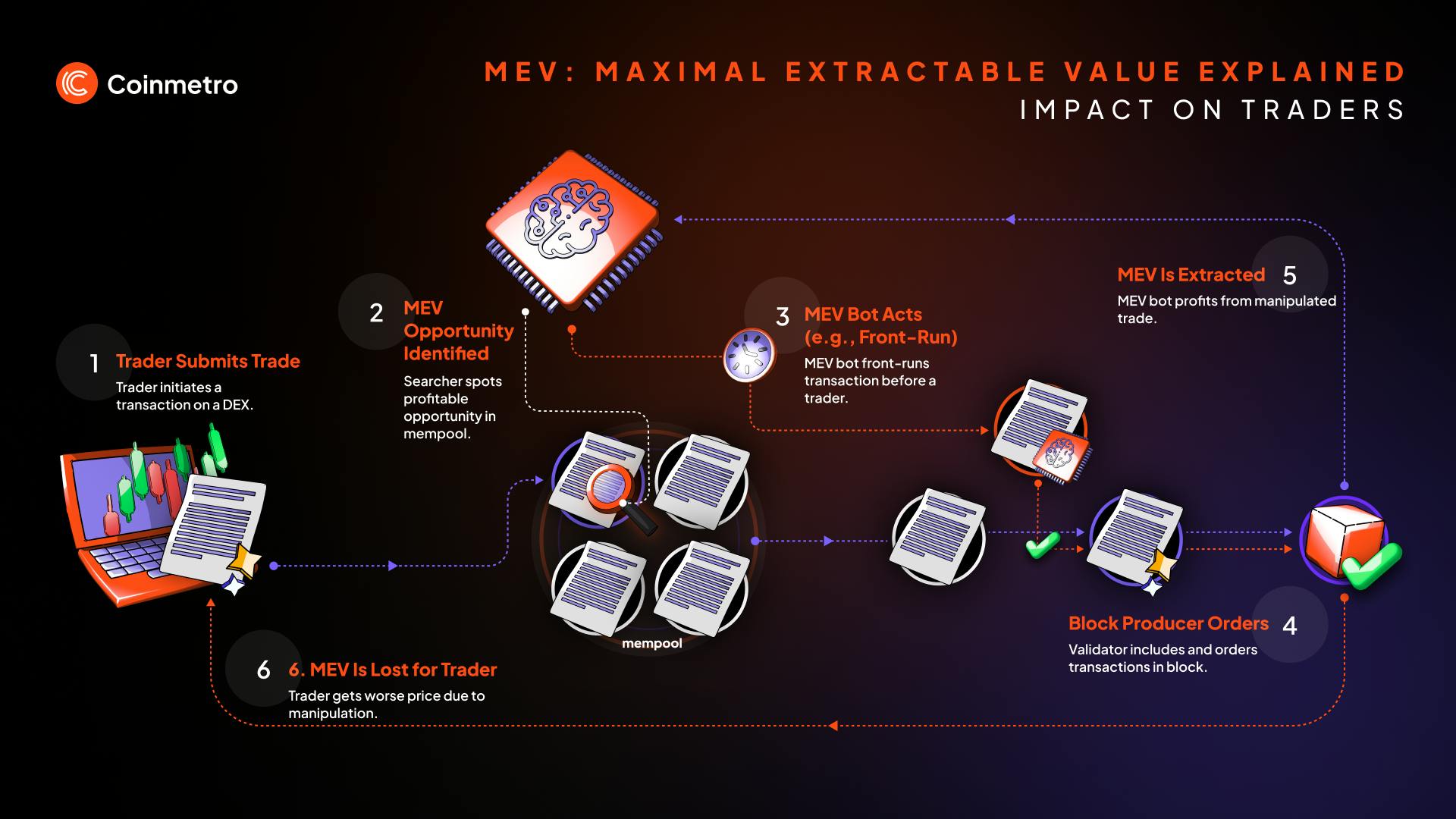
Traditional DeFi strategies expose positions to prying eyes. Yield farmers and market makers watch as sandwich attacks inflate slippage and erode returns. Recent data underscores the urgency: DeFi losses from security flaws and MEV bots are projected to exceed $3.1 billion in 2025 alone. Yet, innovations like AI-driven MEV protection are flipping the script. By forecasting front-running patterns and executing trades via encrypted channels, these copilots restore control to users.
The Hidden Costs of MEV on Liquidity Provision
Liquidity providers power DeFi, but MEV turns their contributions into liabilities. Front-running bots reorder transactions to capture arbitrage spreads, leaving LPs with suboptimal fills. Sandwich attacks are particularly vicious: a bot encases your trade between two of its own, forcing unfavorable prices. Studies show aggressive MEV extraction hikes costs for everyday users, while liquidity strategies suffer premature withdrawals to dodge losses.
Consider constant function market makers, where impermanent loss already gnaws at edges. Layer MEV on top, and returns plummet. Privacy’s absence amplifies this; visible LP positions invite targeted exploitation. One analysis reports a 67% reduction in front-running losses through obscured liquidity provision. Without intervention, trust erodes, pushing capital to centralized alternatives.
Key MEV Risks for DeFi LPs
-
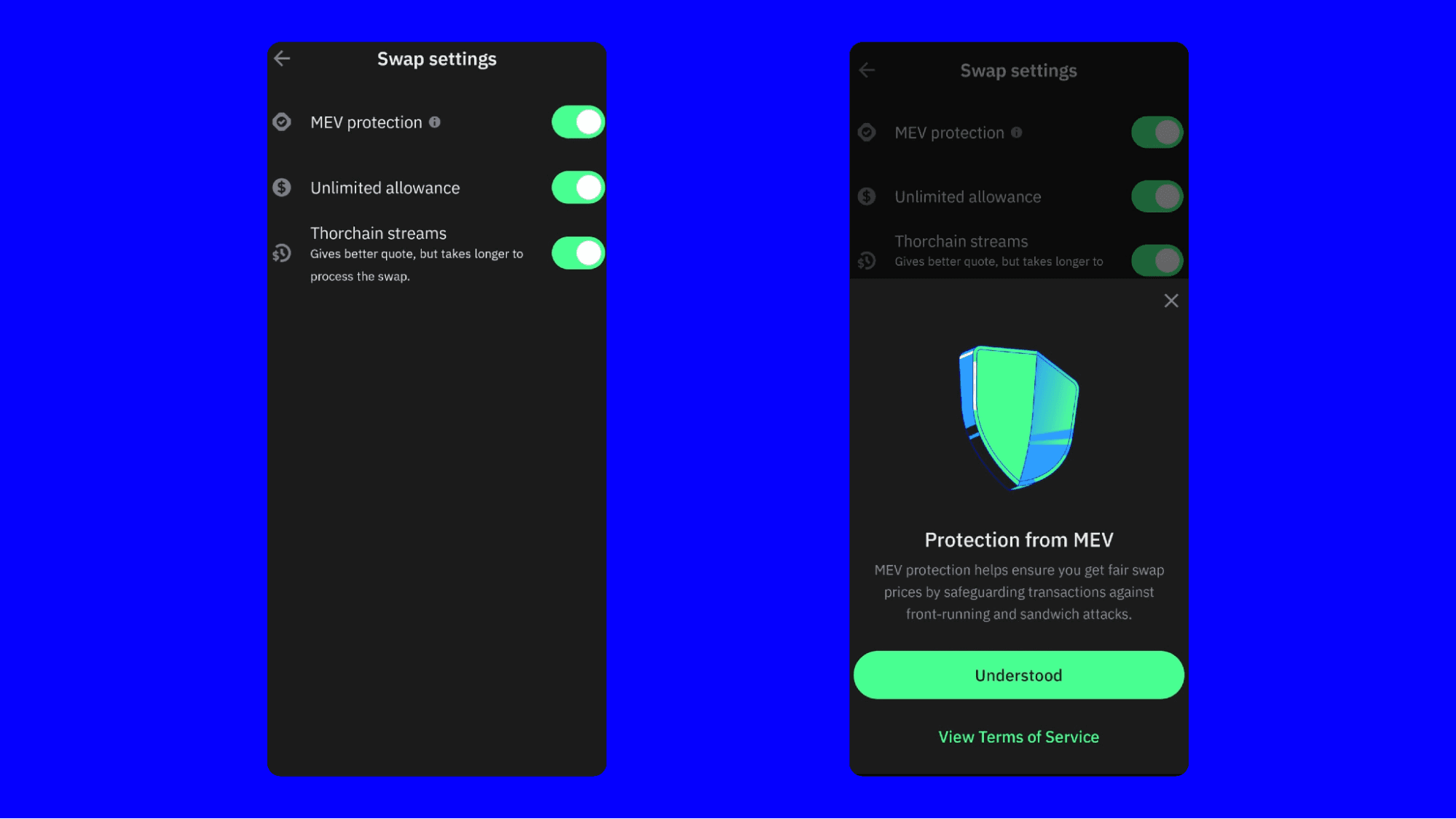
Sandwich Attacks: Malicious bots place buy orders before and sell after an LP’s trade, profiting from induced price movements and causing LP losses.
-

Arbitrage Sniping: Bots detect pending LP transactions offering arbitrage opportunities and front-run them, capturing profits meant for the provider.
-
Increased Slippage: Front-running exacerbates price slippage on large LP actions, leading to worse execution prices and reduced returns.
-

Position Drainage: Coordinated MEV exploits can rapidly drain LP positions by manipulating pool balances against providers.
-
Eroded Yields: Cumulative MEV extractions diminish overall APYs for LPs, undermining the profitability of automated strategies.
AI Copilots: Predictive Power Meets Privacy Engineering
Privacy-first AI copilots transcend basic automation. They learn from real-time blockchain data, simulating mempool dynamics to preempt bot maneuvers. Platforms like Privora AI deploy private agents for yield farming and liquidity management, routing trades through anonymity layers. This obfuscates intent, making front-running futile.
DeFAI exemplifies the shift: AI agents manage liquidity, execute trades, and optimize yields via continuous learning. Integrated with cross-chain DEX architectures, they enforce AI-enhanced stop-losses, blending multi-chain access with risk controls. Meanwhile, encrypted execution in layers like FAIR L1 eliminates the transparency window MEV exploits, embedding privacy at consensus.
These tools refine liquidity provision dynamically. AI-powered market makers leverage live feeds and algorithms to minimize slippage, ensuring consistent pricing. For LPs, this means automated strategies that adapt without exposure. Prediction models flag risky mempools, bundling transactions privately or delaying execution until safe windows emerge.
RediSwap and Beyond: Mechanisms Reinforcing AI Defenses
RediSwap stands out by redistributing MEV within CFMMs, slashing LP losses from sandwich attacks. Paired with AI copilots, it creates a synergistic barrier. Bots still hunt, but redistributed value flows back to providers, neutralizing theft. Oodles Blockchain highlights how such strategies ensure fairness in smart contracts, bolstering security.
Autonomous agents on blockchains further evolve standards. They withdraw liquidity preemptively during high-MEV periods, guided by AI foresight. Top chains for AI deployment, per BlockApex, prioritize low-latency execution, ideal for real-time MEV evasion. The result? LPs reclaim dominance in volatile protocols.
Yet dominance demands vigilance. Even with AI copilots, no strategy is foolproof in DeFi’s wilds. Residual risks linger: oracle manipulations or flash loan exploits can still pierce defenses. My experience in commodities trading underscores this; hybrid approaches blending privacy tech with rigorous backtesting yield the steadiest results. Liquidity providers must pair these tools with diversified positions across chains optimized for AI agents.
Real-World Deployments: Privora AI and Encrypted Agents in Action
Privora AI exemplifies privacy-first execution. Its agents handle yield farming and LP tasks anonymously, masking transactions via zero-knowledge proofs and mixer protocols. This AI copilot DeFi privacy layer thwarts MEV front-running protection DeFi needs by rendering positions invisible. Users report seamless integration with Uniswap V3 and similar pools, where encrypted AI agents liquidity pools adjust ranges proactively.
Cross-chain capabilities amplify impact. Jung-Hua Liu’s architecture merges multi-chain liquidity with AI stop-losses, vital for LPs straddling Ethereum, Solana, and emerging L1s like FAIR. Here, AI scans mempools across networks, bundling trades into private relays. CoW DAO’s DeFAI agents take it further, self-optimizing yields while evading bots through intent-based execution.
Blockworks notes FAIR L1’s encrypted consensus as a game-changer, closing MEV’s transparency gap at the protocol level. For LPs, this means AI copilots operate atop foundations immune to ordering games. Codezeros highlights AI market makers refining provision in real-time, curbing slippage that bots exacerbate.
Risk Mitigation: Beyond Protection to Proactive Yield Maximization
Protection alone falls short; true value lies in offense. Privacy-first copilots forecast impermanent loss corridors, auto-rebalancing pools before volatility spikes. In high-MEV environments, they simulate adversarial scenarios, withdrawing or hedging via perps on dYdX or GMX. Berke Kiran’s privacy apps slashed front-running losses by 67% through hidden LP spots, a benchmark these tools surpass with predictive analytics.
Oodles Blockchain stresses contract-level safeguards: commit-reveal schemes paired with AI timing ensure fair ordering. Autonomous agents, per arXiv standards, enforce this autonomously, raising gas costs for MEV hunters while subsidizing LPs. BlockApex ranks chains like Berachain and Monad for AI deployment, citing sub-second finality essential for secure DeFi yield farming AI.
DeFi’s $3.1 billion 2025 loss projection from AInvest serves as a stark reminder. Yet AI shifts the calculus. LPs adopting these copilots sidestep DeFi liquidity MEV bots avoidance pitfalls, channeling capital into sustainable strategies. I’ve advised protocols where such integrations boosted APRs by 20-30%, net of MEV drag.
Challenges persist. Privacy tech adds latency; not all chains support it natively. Regulatory scrutiny on mixers looms, demanding compliant designs. Still, the trajectory points upward. As AI agents mature, they’ll orchestrate multi-protocol balancers, invisibly arbitraging yields while bots chase ghosts.
Liquidity providers stand at a pivot. Cling to transparent strategies, and MEV erodes edges. Embrace privacy-first AI copilots, and protocols become fortresses. Risk managed is reward maximized; in DeFi’s arena, this mantra has never rung truer.