
The shift from clicks to prompts
2026 marks the inflection point where manual DeFi interaction is replaced by natural language prompts. A year ago, most AI lived in pilots and side projects. Today, it is embedded in workflows and products, shifting from experimental tools to essential infrastructure.
The interface has changed. Instead of navigating complex dashboards and manually approving transactions, users now interact with autonomous agents that trade, rebalance, and manage risk based on simple instructions. This transition from clicking buttons to prompting agents reduces friction and democratizes access to sophisticated strategies.
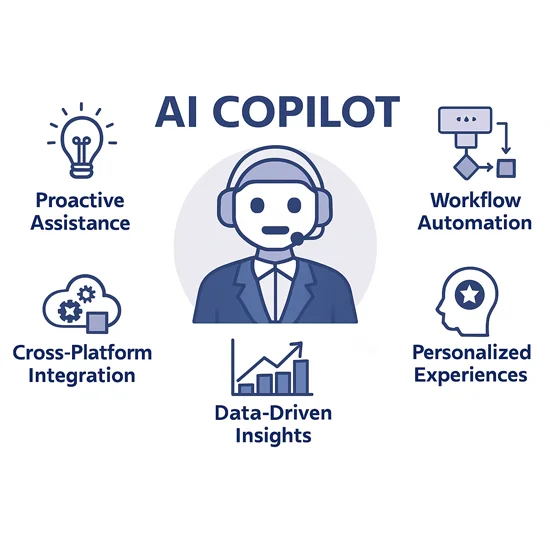
This shift acknowledges the high-stakes nature of financial risk. Autonomous agents operate with precision, but they require robust oversight. As the industry moves forward, the focus is on creating systems that are not just convenient, but reliable and transparent.
Agents that hunt yield automatically
Autonomous yield agents operate like high-frequency market makers that never sleep, constantly scanning liquidity pools across multiple chains to capture the highest returns. These AI copilots remove the need for manual rebalancing, executing complex strategies across protocols in milliseconds. However, this speed introduces significant risk; smart contract vulnerabilities or flash loan attacks can erase gains instantly.
1. Eido (Berachain)
Eido acts as a natural-language interface for the Berachain ecosystem, allowing users to direct capital through chat commands. It autonomously identifies and shifts funds to the most lucrative staking or liquidity positions within its native environment, reducing the friction of manual DeFi operations.
2. Zebec AI
Leveraging its native PayFi infrastructure, Zebec’s AI agents focus on automated cash flow management. They continuously monitor yield opportunities for recurring revenue streams, automatically reinvesting profits to compound returns without user intervention. This is particularly effective for long-term holders seeking passive income with minimal oversight.
3. Hyperliquid Agent
Operating on the Hyperliquid perpetual exchange, this agent specializes in derivatives yield. It executes sophisticated arbitrage strategies between spot and perpetual markets, capturing small price discrepancies at scale. The agent’s speed allows it to outperform manual traders in volatile conditions, though it requires careful risk parameter setting.
Real-time risk management and auditing
DeFi AI copilots act as a permanent safety net, monitoring smart contracts for vulnerabilities and adjusting positions to mitigate systemic risk before it impacts the user. Unlike static security tools that only flag issues after a breach, autonomous agents operate as active guards, continuously scanning the blockchain for anomalies. They detect malicious transactions, identify exploitable code patterns, and can automatically rebalance portfolios or halt trading when threat levels spike.
This proactive defense is critical in high-stakes environments where seconds matter. AI agents analyze on-chain data in real time, spotting unusual gas price spikes, liquidity pool drains, or contract interactions that deviate from established norms. When a potential exploit is detected, the agent can execute countermeasures—such as withdrawing funds from a vulnerable protocol or switching to a safer liquidity route—without waiting for human approval. This "self-healing" capability ensures that capital remains protected even when underlying protocols face sudden stress.
The integration of real-time auditing transforms how users interact with DeFi. Instead of manually reviewing contract code or relying on periodic security audits, users delegate this burden to AI agents trained on vast datasets of historical exploits and current threat vectors. These agents provide a layer of dynamic security that adapts to the evolving landscape of DeFi vulnerabilities, offering peace of mind in an environment defined by rapid innovation and inherent risk.
How Leading Agents Compare
Choosing a DeFi AI copilot requires matching the agent’s autonomy level and fee structure to your specific risk tolerance. These agents range from simple execution helpers to fully autonomous yield farmers, each operating on different chains with distinct cost models.
The following comparison highlights key differences across five leading agents, focusing on supported ecosystems, fee transparency, and operational scope.
| Agent | Primary Chains | Autonomy Level | Fee Structure |
|---|---|---|---|
| Eido | Berachain | Chat-to-Action | Variable Gas + Platform |
| DeFi Saver AI | Ethereum, Arbitrum | Semi-Autonomous | Success Fee on Savings |
| Zerion AI | Multi-chain | Advisory/Execution | Subscription + Gas |
| Morpho AI | Ethereum, Optimism | Algorithmic Yield | Protocol Yield Spread |
| RabbitHole AI | Multi-chain | Data-Driven Trading | Performance Based |
The shift from tool to partner
By 2026, the role of an AI copilot is moving beyond simple transaction execution. It is becoming the primary interface for crypto wallets, shifting the dynamic from a user operating a tool to a user collaborating with a partner. This transition is not just about convenience; it is about handling the increasing complexity of DeFi protocols that are now too intricate for manual management.
Operational dominance is the next milestone. Research from KuCoin predicts that AI agents will execute over 80% of DeFi transactions by 2030. This statistic signals a fundamental change in how liquidity is managed and risk is assessed. The wallet is no longer a static vault but a dynamic agent capable of autonomous decision-making.
This shift brings high-stakes implications. As agents take the wheel, the margin for error shrinks. Users must trust these systems with their financial survival, not just their portfolio growth. The interface becomes a dialogue, requiring constant oversight rather than passive holding. The future belongs to those who can effectively partner with these autonomous systems without losing sight of the underlying risks.
No comments yet. Be the first to share your thoughts!