What DeFi AI Copilots Do
DeFi AI copilots function as autonomous agents that execute yield farming tasks rather than merely offering advisory recommendations. Unlike traditional tools that provide market analysis, these agents operate within decentralized finance to automate swaps, lending, and bridging. This shift defines "agentic finance," where the primary value lies in on-chain execution rather than passive insight.
The sharp line distinguishing these tools is execution. A DeFi AI agent’s core function involves swapping tokens, lending assets, staking capital, or moving liquidity between protocols. By integrating artificial intelligence with decentralized infrastructure, these systems create automated financial workflows that respond to market conditions in real time.
This automation reduces the manual overhead of yield farming but introduces new operational risks. Because the agent acts autonomously, errors in logic or smart contract interactions can result in immediate, irreversible losses. Users must understand that they are deploying software agents to manage capital, a process that requires rigorous technical due diligence and risk assessment.
Leading DeFi AI Copilots
The DeFi AI copilot sector has shifted from experimental prototypes to deployed execution engines. These agents automate yield farming by monitoring on-chain data, rebalancing portfolios, and executing cross-chain transactions. The following tools represent the current state of agentic finance as of 2026.
Kava AI
Kava AI focuses on cross-chain data aggregation and AI-driven execution. Its architecture aggregates real-time insights across multiple blockchains to optimize yield strategies. The system is designed to reduce the manual overhead of monitoring disparate DeFi protocols. Kava AI aims to provide a unified interface for managing liquidity across its native ecosystem and connected chains.
DeFi Pilot
DeFi Pilot operates -powered portfolio tracking assistant. It monitors holdings and analyzes performance to suggest smarter DeFi strategies. The tool emphasizes seamless portfolio tracking, allowing users to view their aggregated assets in one dashboard. It provides analytical insights rather than direct execution, serving as a decision-support layer for investors. The project was showcased at ETHGlobal, highlighting its focus on user-friendly data visualization.
DeFi Copilot AI (Sei)
DeFi Copilot AI offers real-time investment advice and forecasting, specifically optimized for the Sei blockchain. It addresses the complexity of managing volatile Web3 assets by providing AI-driven recommendations. The platform allows users to receive actionable insights based on current market conditions and protocol-specific risks. Its cross-chain capabilities extend beyond Sei, but its primary integration is with the Sei ecosystem. The tool is available through DoraHacks, a platform for tracking Web3 development milestones.
CoPilot AI
CoPilot AI positions itself as a comprehensive crypto command center. It integrates trading, investing, and exploration of mini-apps within a single interface. The platform uses natural language processing to execute commands, allowing users to interact with DeFi protocols through simple text prompts. It aggregates various mini-apps, providing a centralized hub for managing multiple DeFi activities. The tool is listed on World.org, indicating its presence in broader Web3 app directories.
Timeline of Emergence
The development of these tools reflects a rapid evolution in agentic finance. Early prototypes focused on basic portfolio tracking, while recent versions incorporate autonomous execution and cross-chain management.
How Agents Execute Yield Strategies
DeFi AI agents operate as autonomous execution layers, translating high-level yield directives into on-chain transactions. Unlike manual yield farming, which requires constant human monitoring of liquidity pools and gas fees, these agents function as continuous monitoring and rebalancing systems. The primary objective is to maximize annual percentage yield (APY) while maintaining strict risk parameters defined by the user.
The workflow generally follows a four-step sequence: scanning, analysis, execution, and rebalancing. This process allows agents to react to market volatility faster than human operators, though it introduces new technical risks regarding smart contract interactions and cross-chain bridge security.
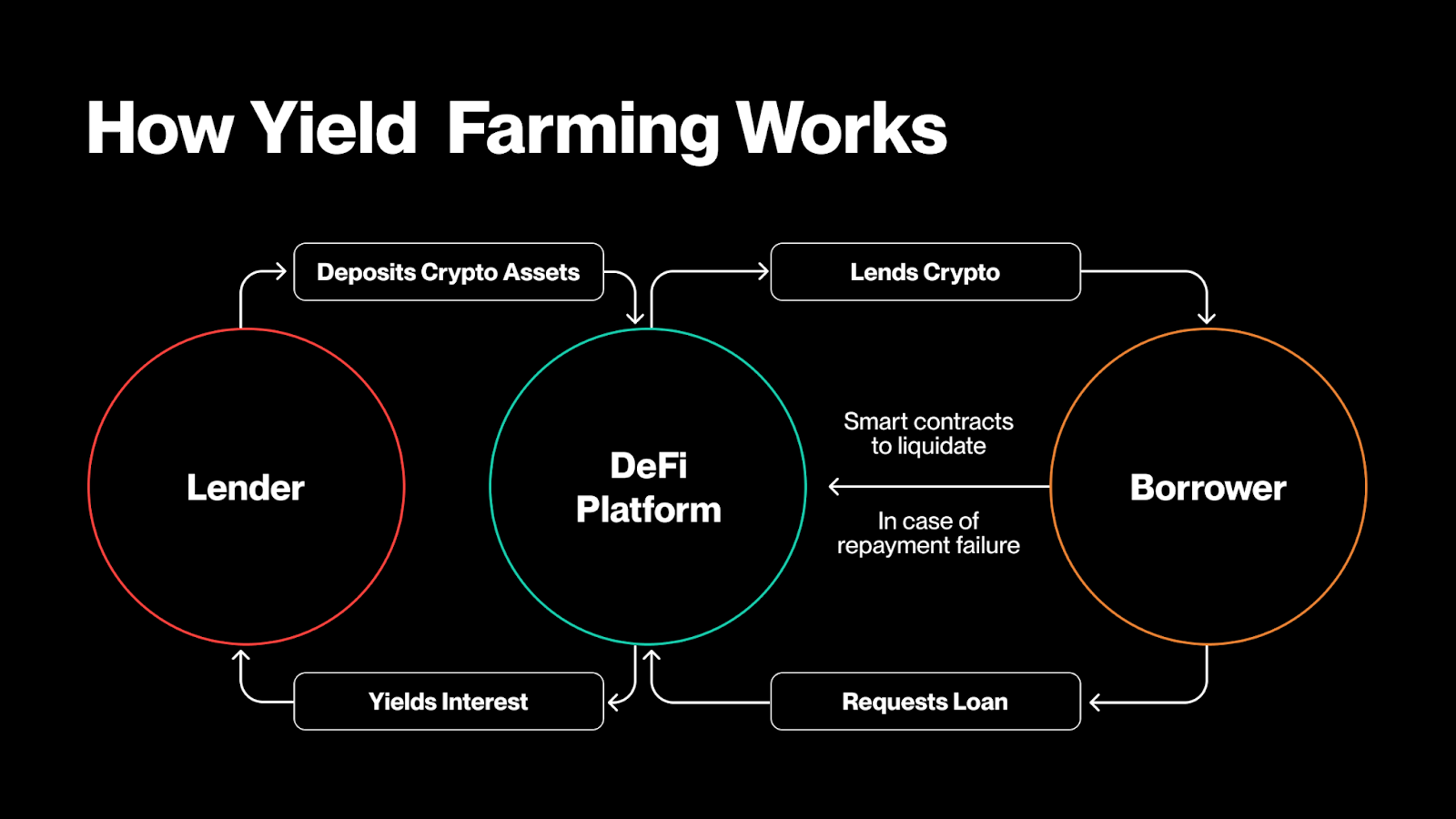
The agent continuously queries blockchain nodes and decentralized exchange (DEX) aggregators to identify active liquidity pools. It filters these pools based on specific criteria, such as minimum liquidity depth, historical volatility, and token pair composition. This step ensures that the agent only considers pools that meet the predefined safety thresholds before proceeding to analysis.

Once potential pools are identified, the agent evaluates the associated risks. This includes calculating impermanent loss exposure, assessing the smart contract audit status of the protocol, and monitoring real-time APY fluctuations. The agent compares the projected returns against the user's risk tolerance, ensuring that the potential yield justifies the exposure to market volatility and contract failure.
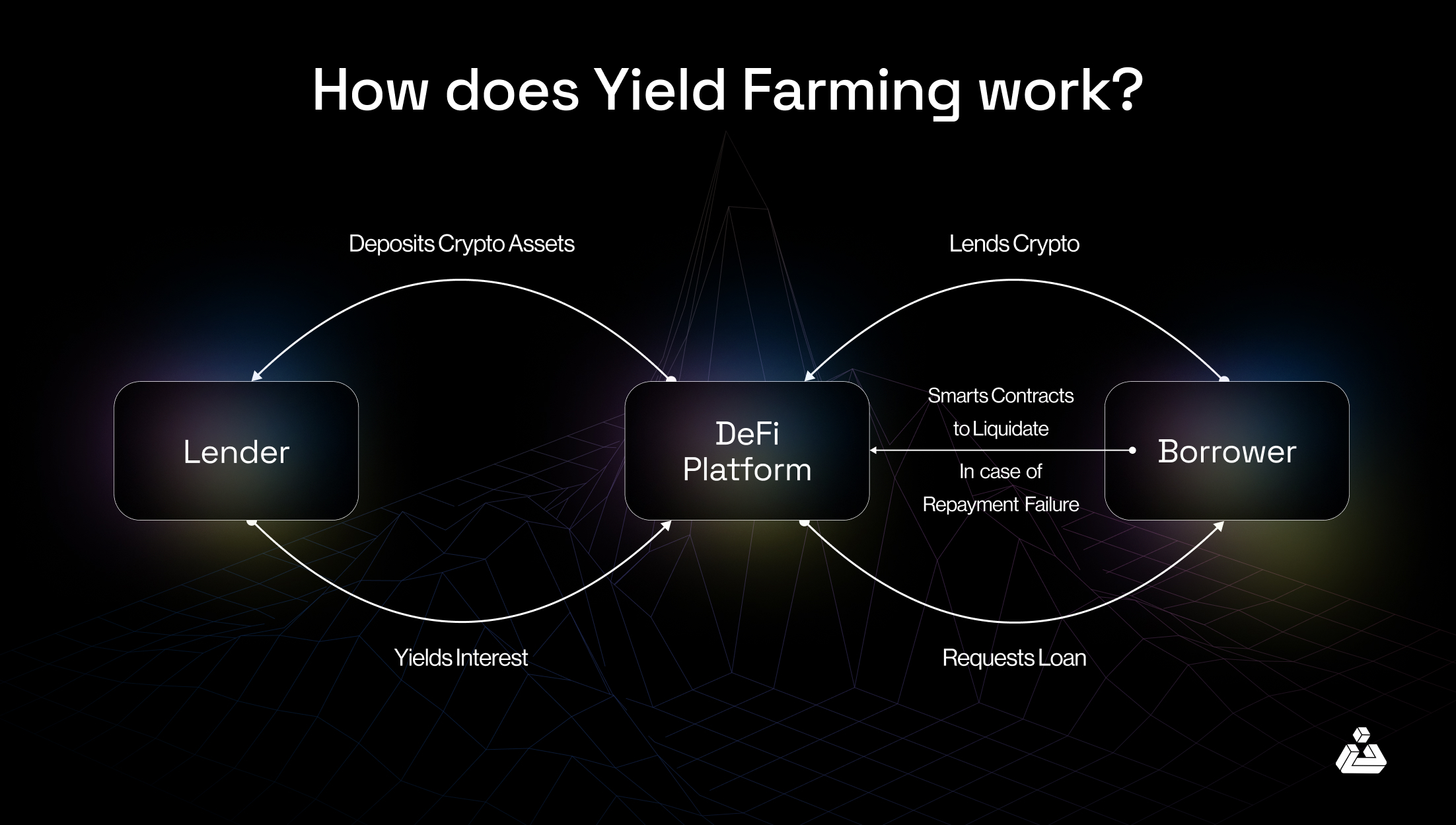
If the risk analysis is favorable, the agent executes the necessary transactions. This often involves swapping assets via a DEX aggregator to obtain the required tokens for the target pool. If the highest-yielding pool is on a different blockchain, the agent initiates a cross-chain bridge transaction. This step is critical, as bridge failures or high slippage can significantly impact the final yield.
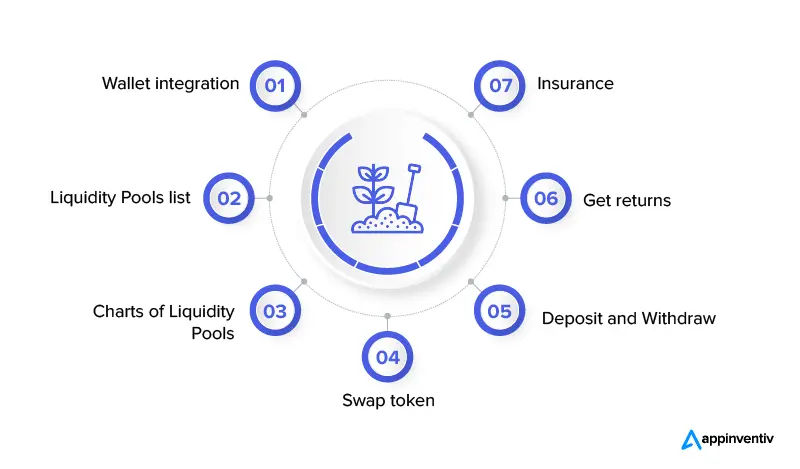
The final step involves periodic rebalancing. As market conditions change, the initial yield advantage may diminish or the risk profile may shift. The agent monitors these changes and automatically withdraws liquidity or moves it to a more optimal pool. This continuous adjustment ensures that the portfolio remains aligned with the user's yield goals without requiring manual intervention.
This automated execution model, often referred to as DeFAI (Decentralized Finance AI), integrates artificial intelligence with decentralized finance to create smarter financial systems. As noted by industry providers like Kava AI, the ability to aggregate real-time data across multiple blockchains allows for more efficient capital allocation. However, users must remain aware that automated execution does not eliminate smart contract risk.
Compliance and Risk in Automated Finance
As autonomous agents execute yield farming strategies without human intervention, the regulatory landscape shifts from reactive monitoring to proactive liability. The European Union’s Markets in Crypto-Assets (MiCA) regulation, effective in 2024, establishes strict transparency requirements for digital asset service providers. Under MiCA, the boundary between a financial advisor and a software tool is increasingly defined by who bears the liability for algorithmic errors. When an AI copilot autonomously rebalances a portfolio, the legal responsibility for losses caused by smart contract exploits or oracle failures often falls on the protocol operators rather than the end user.
Smart contract risk remains the primary technical vulnerability. AI agents interact with immutable code on-chain; if a liquidity pool contract contains a flaw, the agent may execute transactions that drain funds before any manual override is possible. This creates a "liability gap" where traditional insurance models struggle to cover losses resulting from AI-driven actions. Users must recognize that autonomous execution increases exposure to both market volatility and code-level exploits.
To mitigate these risks, compliance tools like Elliptic Copilot are integrating directly into DeFi workflows. Elliptic’s platform uses AI to automate risk context-building, allowing compliance teams to analyze transaction flows in real time. This technology helps identify suspicious patterns before they result in regulatory breaches. By embedding compliance checks into the automation layer, platforms can adhere to anti-money laundering (AML) standards while maintaining the speed required for high-frequency yield farming.
The convergence of AI and DeFi requires a dual-layer approach to risk management. Technical safeguards must prevent agents from interacting with unverified contracts, while legal frameworks must clarify accountability when autonomous systems fail. As jurisdictions like the United States and the EU refine their crypto policies, the focus will remain on ensuring that automation does not outpace regulatory oversight.
No comments yet. Be the first to share your thoughts!