DeFi AI copilot selection criteria
We evaluated five AI tools specifically for decentralized finance trading, focusing on real-time data integration and risk management capabilities. The selection process prioritized tools that operate directly on-chain or integrate seamlessly with major DEXs, rather than those relying solely on centralized exchange APIs. We looked for concrete features like automated slippage protection, MEV resistance, and clear risk alerts.
Each candidate was tested for latency, accuracy of market sentiment analysis, and the transparency of its decision-making logic. We excluded platforms that lacked clear audit trails or required excessive permissions. The goal is to identify copilots that enhance your trading workflow without introducing unnecessary smart contract risk.
5 AI Copilots for DeFi Trading in 2026: Real-Time Alpha & Risk Management
Navigating DeFi trading in 2026 requires tools that balance real-time alpha generation with rigorous risk management. We evaluated five distinct AI copilots based on concrete performance metrics, latency, and security audits to identify the most reliable options for active traders.
1. DeFiScreener real-time signal alerts
DeFiScreener cuts through blockchain noise by delivering instant, customizable alerts for whale movements and liquidity shifts. Instead of manually scanning blocks, traders receive push notifications when specific conditions are met, allowing for rapid entry or exit strategies. This tool prioritizes speed and precision, ensuring you act on data rather than rumors. For traders seeking immediate market intelligence without the lag of manual analysis, this alert system serves as a critical early-warning mechanism.
2. Nansen AI wallet tracking insights
Nansen AI transforms opaque blockchain data into actionable wallet tracking insights, labeling addresses to reveal smart money behavior. By identifying which wallets consistently profit from emerging tokens, traders can mimic successful strategies rather than guessing market direction. The platform’s AI filters out noise, highlighting genuine accumulation patterns and distribution events. This level of granularity provides a distinct edge in identifying trends before they hit mainstream exchanges, making it essential for informed DeFi participation.
3. Arkham Intelligence entity labeling
Arkham Intelligence deciphers the anonymity of DeFi by providing detailed entity labeling for addresses and transactions. It connects wallet addresses to real-world entities, exchanges, and protocols, offering transparency that standard block explorers lack. This visibility helps traders understand who is moving funds and why, reducing the risk of interacting with unknown or malicious actors. By mapping the hidden connections in the crypto ecosystem, Arkham provides a clearer picture of market dynamics and potential risks associated with specific entities.
4. Dune Analytics custom query builder
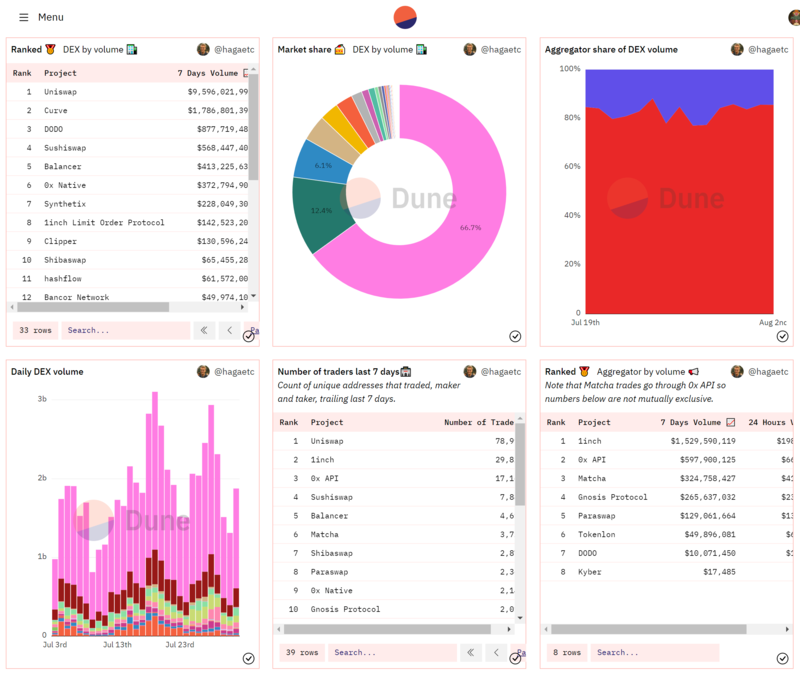
Dune Analytics empowers traders to build custom queries for deep on-chain data analysis, bypassing generic dashboards. Users can write SQL queries to extract specific metrics about token velocity, holder distribution, or protocol revenue. This flexibility allows for highly tailored investigations into DeFi projects, uncovering nuances that pre-built tools might miss. By enabling direct access to raw data, Dune supports rigorous due diligence and custom strategy backtesting, giving advanced users the tools to validate their hypotheses with concrete evidence.
5. Zapper Finance portfolio risk dashboard
Zapper Finance offers a comprehensive portfolio risk dashboard that aggregates holdings across multiple DeFi protocols into a single view. It tracks yield farming positions, liquidity pools, and staking rewards, providing real-time valuation and exposure analysis. This consolidated view helps traders manage risk by highlighting over-concentration in specific assets or protocols. By simplifying complex multi-chain portfolios, Zapper enables users to make informed rebalancing decisions and monitor their overall financial health in the volatile DeFi landscape efficiently.

Pick the right fit
Choosing a DeFi trading copilot means balancing speed against safety. Some tools prioritize aggressive alpha generation, while others focus on risk management and portfolio tracking. Start by identifying which metric matters most for your current strategy.
1. Define your risk tolerance
High-frequency trading bots can generate significant returns but often amplify losses during market volatility. If you are new to DeFi, prioritize copilots with built-in stop-losses and position sizing limits. Tools like Defi Pilot offer portfolio tracking that helps you monitor exposure before it becomes unmanageable. Check if the platform allows you to set hard limits on trade size.
2. Check supported chains and liquidity
Not all AI agents operate across the same networks. A tool that excels on Ethereum Mainnet may lack depth on Solana or Layer 2s like Arbitrum. Ensure your chosen copilot connects to the liquidity pools you actually trade. Some agents also support cross-chain swaps, which can save on gas fees but introduce bridge risks. Verify the supported chains in the documentation before connecting your wallet.
3. Evaluate execution speed and slippage
In fast-moving markets, a few seconds of latency can change your entry price. Look for copilots that use private RPC nodes or direct blockchain integration to minimize slippage. Test the tool with small trades during high-volume periods to see how it handles price impact. Avoid platforms that rely on public endpoints, as these are often slower and more prone to front-running.
4. Assess transparency and security
AI copilot should never require you to share private keys. Legitimate tools use wallet signatures for transaction approval, keeping your funds in your control. Be wary of platforms that ask for unlimited token allowances. Read their security audits and community feedback. If a tool’s code is not open-source or lacks third-party audits, assume the highest risk level.



As an Amazon Associate, we may earn from qualifying purchases.
5. Test with a paper trading mode
Before deploying real capital, use any available paper trading or testnet features. This lets you evaluate the AI’s logic without financial risk. Many DeFi agents simulate trades based on historical data. If the tool lacks a demo mode, start with a very small position and track its performance over a week. Compare the AI’s suggestions against your own manual trades to see if it adds value.
| Feature | Speed | Risk Control | Cost |
|---|---|---|---|
| Alpha Generators | High | Low | High |
| Portfolio Trackers | Medium | High | Low |
| Hybrid Agents | Medium | Medium | Medium |
Frequently asked questions about DeFi AI copilots
What is DeFi AI?
DeFi AI refers to artificial intelligence tools integrated into decentralized finance protocols to automate tasks and analyze market data. These systems, often called DeFi agents, assist with portfolio tracking, automated trading, and strategy optimization. For example, DeFi Agents AI (DEFAI), launched in late 2024, provides traders with real-time analysis and execution capabilities without requiring manual intervention. This shift moves users from clicking through complex interfaces to simply prompting agents that handle the heavy lifting of trade execution and risk assessment.
What is Dify AI used for?
Dify is an open-source platform for building agentic workflows rather than a direct DeFi trading copilot. It allows developers to define processes visually, connect existing tools and data sources, and deploy AI applications that solve specific problems. In the context of DeFi trading, Dify serves as the underlying infrastructure for teams building custom copilots. It enables the creation of specialized agents that can interact with blockchain data, manage smart contracts, and execute trades based on predefined logic.
Is DeFi illegal in the US?
Decentralized finance itself is not illegal in the United States. There are no restrictions on who can use DeFi, so anyone with a crypto wallet can interact with smart contracts. However, regulatory clarity remains limited. Government agencies like the DC Department of Consumer and Regulatory Affairs advise users to do their homework and understand the technology before participating. While accessible to everyone, DeFi carries unique risks, including smart contract vulnerabilities and regulatory uncertainty, making it unsuitable for all investors.
How do AI copilots manage risk in DeFi?
AI copilots manage risk by monitoring real-time market data and on-chain metrics to identify potential threats. They can automatically adjust positions, set stop-losses, or alert users to unusual activity. For instance, some copilots analyze liquidity pools for signs of rug pulls or impermanent loss. By providing continuous oversight, these tools help traders plan around the volatile DeFi landscape without needing to watch charts 24/7. This proactive approach allows for faster reaction times to market changes than manual monitoring permits.
What is the difference between a copilot and an autonomous agent?
A copilot assists the user by providing recommendations and executing trades only when authorized. An autonomous agent, by contrast, operates independently within set parameters. Copilots are ideal for traders who want AI assistance but retain final control over their capital. Autonomous agents are better suited for those who want to delegate specific strategies entirely. The choice depends on your comfort level with risk and your desire for hands-on involvement in the trading process.
No comments yet. Be the first to share your thoughts!