
The Shift to Autonomous DeFAI Agents
By 2026, decentralized finance is no longer defined by manual trading or static yield farming. The sector is undergoing a structural pivot toward autonomous DeFAI agents, where AI copilots manage liquidity and risk without constant human intervention. This shift addresses the core bottleneck of DeFi: the high cognitive load required to navigate fragmented protocols and volatile markets.
Crypto executives at Consensus Miami 2026 emphasized that DeFi is not dying but moving into the financial mainstream, driven by this automation. The new standard is predictive, not reactive. Agents analyze on-chain data in real-time to adjust positions before market shifts occur, transforming DeFi from a manual execution layer into an autonomous management system. This reduces exposure to slippage and gas inefficiencies that plague manual traders.
The underlying asset volatility these agents manage is significant. Understanding the baseline market movement is essential for evaluating agent performance.
This transition demands rigorous due diligence. While autonomy offers efficiency, it introduces new risks, including smart contract vulnerabilities and algorithmic bias. Investors must verify the audit status and transparency of these AI-driven protocols, treating them with the same scrutiny as traditional financial advisors.
Leading DeFi AI Copilot platforms in 2026
The DeFAI landscape in 2026 has moved beyond experimental bots to autonomous agents capable of executing complex, multi-chain yield strategies. These platforms do not merely suggest trades; they manage liquidity, hedge risks, and rebalance portfolios in real-time. However, the automation introduces new vectors for smart contract risk and AI hallucination. Users must treat these agents as high-stakes tools requiring rigorous due diligence.
Bittensor (TAO)
Bittensor operates as a decentralized network where AI models compete to provide the most accurate predictions and data services. In the DeFi context, TAO-powered agents aggregate market intelligence to optimize yield farming routes across multiple protocols. Its open-source nature allows developers to build custom autonomous agents on top of the subnet infrastructure, creating a competitive ecosystem where better AI models earn more TAO rewards.
Eigenpie
Eigenpie focuses on automated asset management through its "Yield Farming" and "Staking" modules. The platform uses AI to scan hundreds of DeFi protocols for the most efficient yield opportunities, automatically executing transactions to capture them. While it simplifies the user experience, the reliance on pre-vetted strategies means users are exposed to the specific risk profiles of the underlying protocols Eigenpie selects.
Nansen
Originally a blockchain analytics tool, Nansen has integrated AI-driven "Copilot" features that provide real-time sentiment analysis and whale tracking. For DeFi users, this means access to institutional-grade data that can inform autonomous trading decisions. Nansen’s AI highlights unusual token movements and smart money flows, allowing users to adjust their positions before market-wide shifts occur.
DeXe
DeXe is a decentralized autonomous organization (DAO) tool that leverages AI to manage governance and treasury operations. Its AI agents can propose and execute voting strategies based on predefined risk parameters, ensuring that decentralized funds are allocated efficiently. This is particularly relevant for DeFi protocols looking to automate their treasury management without relying on centralized operators.
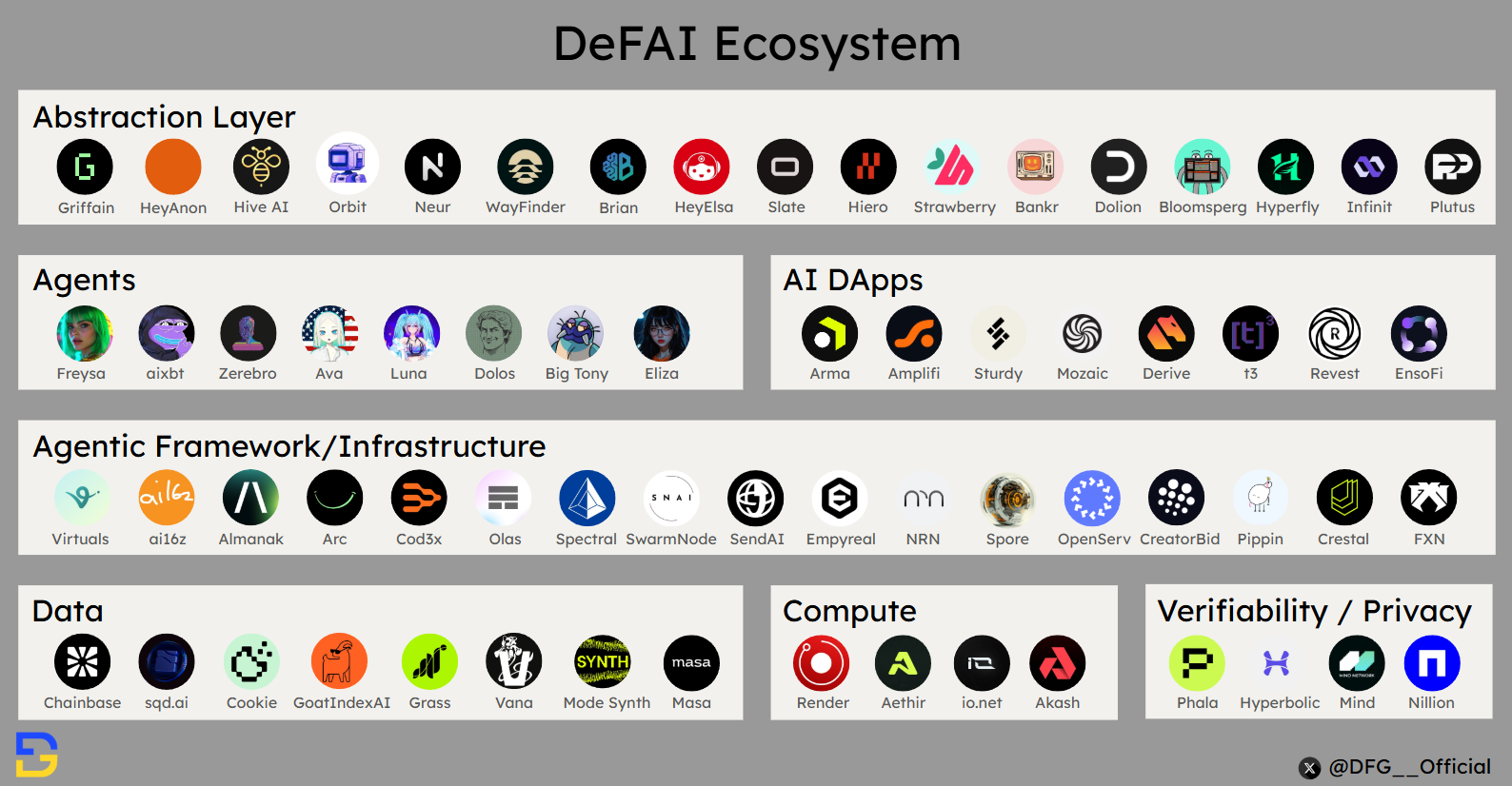
Comparison of Top DeFi AI Copilots
| Project | Primary Function | Autonomy Level | Key Risk Factor |
|---|---|---|---|
| Bittensor (TAO) | Decentralized AI Network | High (Subnet-based) | Model quality variance |
| Eigenpie | Automated Yield Farming | High (Strategy-based) | Underlying protocol risk |
| Nansen | Market Intelligence | Medium (Data-driven) | Data latency |
| DeXe | DAO Treasury Management | High (Governance-based) | Governance attack vectors |
The choice of platform depends on whether you prioritize raw yield generation (Eigenpie), market intelligence (Nansen), or decentralized AI infrastructure (Bittensor). Always verify the smart contract audits and historical performance of any AI agent before deploying capital.
How AI copilots automate yield strategies
Autonomous yield agents operate by continuously scanning on-chain data to identify high-yield opportunities, then executing trades without human intervention. Unlike traditional yield farming, which requires manual monitoring and rebalancing, these AI-driven systems use predictive models to adjust positions in real-time. They analyze historical performance, current liquidity depths, and upcoming protocol upgrades to determine the optimal allocation for each asset.
The core mechanism relies on sophisticated predictive analytics. These agents process vast amounts of historical data to forecast market movements and protocol risks. By identifying patterns that human traders might miss, they can enter and exit positions with precision. This predictive capability allows them to react to market shifts faster than any manual strategy, capturing fleeting yield opportunities before they disappear.
However, this automation introduces significant risks. Smart contract vulnerabilities remain a primary concern, as AI agents often require write access to wallets to execute trades. A single exploit can lead to total loss of funds. Over-optimization can also lead to fragility; agents trained on past data may fail to adapt to unprecedented market conditions. Due diligence is essential. Users must understand the underlying algorithms and the security audits of the protocols these agents interact with.
The shift from reactive to predictive management is reshaping DeFi. As noted in recent industry analyses, this transition is not merely a technological upgrade but a fundamental change in how capital is managed. The ability to process data and execute trades autonomously offers efficiency, but it demands a higher level of trust in the AI's decision-making processes and the security of the underlying infrastructure.
Autonomous yield agents carry structural risks
Autonomous yield agents operate in an environment where code is law and bugs are expensive. The convergence of AI decision-making and smart contract execution introduces a unique risk profile: the agent acts as a bridge between off-chain intelligence and on-chain execution, meaning a single error in logic or data can trigger irreversible financial loss. Unlike traditional finance, where human oversight provides a buffer, autonomous agents execute trades at machine speed, leaving little room for manual intervention during a flash crash or exploit.
Smart contract and oracle vulnerabilities
The primary attack surface for these agents lies in the smart contracts they interact with and the oracles that feed them data. If an agent relies on a compromised oracle to determine asset prices, it may execute trades based on manipulated data, leading to significant capital erosion. This is not theoretical; historical exploits in DeFi have frequently targeted price feeds and liquidity pools. Developers must rigorously audit the underlying protocols, ensuring that the agent’s interactions are confined to vetted, audited contracts with sufficient liquidity to absorb volatility without slippage.
The emerging regulatory landscape
Regulators are beginning to scrutinize the intersection of artificial intelligence and decentralized finance. As of 2026, the line between a software tool and a financial advisor is blurring. If an AI agent makes autonomous investment decisions on behalf of a user, it may fall under existing securities regulations, particularly if it promises yields or manages assets in a centralized manner. Industry leaders at Consensus Miami 2026 noted that while DeFi is moving mainstream, the lack of clear regulatory frameworks for AI-driven financial tools creates uncertainty for both developers and users.
The market context for these agents is volatile. The price of Bitcoin, a common asset for yield strategies, fluctuates daily, impacting the risk-reward ratio of autonomous strategies. Investors must understand that an AI agent’s performance is inextricably linked to broader market conditions. A downturn in crypto markets can amplify losses, regardless of the sophistication of the AI’s decision-making algorithms. Due diligence requires not just understanding the AI’s logic, but also assessing its resilience during periods of extreme market stress.
No comments yet. Be the first to share your thoughts!