The defi ai copilot limits to account for
An AI copilot in DeFi acts as an automated analyst, scanning on-chain data to suggest yield strategies and flag risks. While these tools promise efficiency, they introduce a critical constraint: the gap between algorithmic logic and real-world smart contract vulnerabilities. An AI can calculate optimal yields, but it cannot fully guarantee that a protocol’s code is free from exploits or that liquidity won’t vanish during a market crash.
Most AI copilots function by aggregating data from multiple DeFi sources. They monitor token prices, liquidity depths, and historical performance to generate recommendations. For example, tools like Defi Pilot track portfolio holdings and analyze past performance to suggest rebalancing moves. Others, such as Staxiq’s AI Copilot, use models like Google’s Gemini to create personalized strategies. However, these strategies are suggestions, not guarantees. The AI analyzes patterns, but the execution relies on your interaction with immutable smart contracts.
The primary constraint lies in trust and transparency. When you follow an AI’s recommendation to provide liquidity or stake assets, you are interacting with code you may not have audited personally. The AI reduces the time spent on research, but it does not eliminate the need for due diligence. If a protocol is compromised, the AI’s historical data becomes irrelevant. Therefore, the constraint is not just technical but operational: the user must still verify the underlying asset’s safety before executing the AI’s advice.
To navigate this, treat the AI copilot as a research assistant, not a financial advisor. Use its insights to identify opportunities, but verify the protocol’s audit status and total value locked (TVL) yourself. This hybrid approach leverages AI’s speed while maintaining the human oversight necessary for high-stakes DeFi transactions.
Defi ai copilot choices that change the plan
Adopting an AI copilot for yield farming introduces a distinct set of operational risks and efficiency gains. These tools generally fall into two categories: portfolio analysis assistants that monitor holdings and suggest strategies, and autonomous agents that execute transactions directly on-chain. Understanding this distinction is the first step in evaluating which tool fits your risk tolerance.
The primary tradeoff lies between convenience and control. AI copilots can process market data faster than any human, identifying arbitrage opportunities or rebalancing portfolios in real time. However, this speed comes with the risk of algorithmic errors or unexpected interactions with smart contracts. You must decide whether you trust the agent's decision-making logic over your own manual oversight.
| Feature | Analysis-Only Copilot | Autonomous Agent | Primary Risk |
|---|---|---|---|
| Execution | Manual approval required | Automated on-chain execution | Smart contract exploits |
| Data Scope | Portfolio performance tracking | Real-time market arbitrage | Latency in trade execution |
| Cost Structure | Subscription or free tier | Gas fees + per-decision payment | Unexpected gas spikes |
| Transparency | High (read-only access) | Variable (depends on oracle sources) | Black-box decision logic |
When evaluating specific platforms, look for how they handle data sources and execution paths. Some copilots act as intelligence layers for AI agents, charging per decision rather than a flat subscription. Others provide personalized strategies based on large language models but require you to sign every transaction. The latter offers more security but less automation.
Technical performance is equally critical. An AI copilot is only as good as its ability to interact with decentralized exchanges and lending protocols. Check if the tool supports multi-chain environments and how it handles slippage during high-volatility periods. A tool that cannot navigate complex liquidity pools effectively will miss yield opportunities or result in significant losses.
| Feature | Analysis Copilot | Autonomous Agent | Risk Profile |
|---|---|---|---|
| User Control | High | Low | Low |
| Speed | Manual | Instant | Medium |
| Cost | Subscription | Per-transaction | Variable |
| Security | Read-only | Write access | High |
Before committing capital, test the copilot with small amounts or on testnets. Verify how it handles edge cases like sudden market crashes or network congestion. The goal is to find a balance where the AI enhances your strategy without removing your ability to stop the machine if things go wrong.
Choose the next step
DeFi AI copilots automate yield farming and risk management by connecting on-chain data to generative models. They analyze portfolio performance, generate personalized strategies, and execute trades with cryptographic verification. This section outlines three practical approaches to integrating these tools into your workflow.
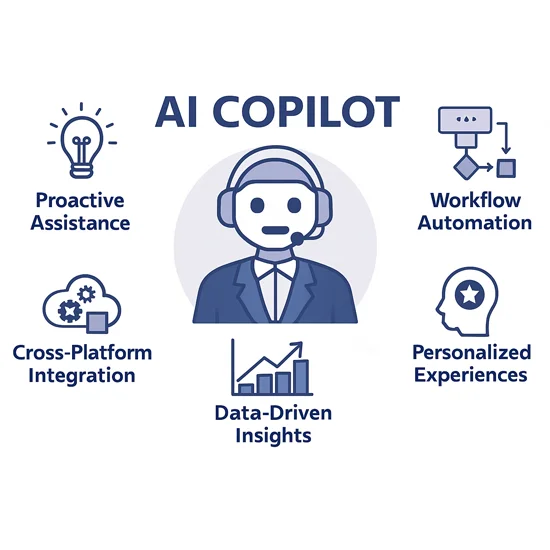
Start by connecting your wallet to an AI-powered assistant like Defi Pilot. This tool tracks holdings and analyzes performance across multiple chains. Ensure your data is clean and up-to-date before the AI generates recommendations.
Use AI models like Google’s Gemini to create tailored Bitcoin DeFi strategies. Staxiq’s AI Copilot, for example, generates cryptographically verified plans based on your risk tolerance and market conditions. Review these suggestions for logical consistency before proceeding.

Implement the chosen strategy using automated yield farming tools. These systems manage liquidity provision and rebalancing, reducing manual intervention. Always set clear exit conditions and monitor the first few cycles to ensure the AI’s logic aligns with your goals.
| Feature | Manual Farming | AI Copilot |
|---|---|---|
Watch for misleading claims and weak options
AI DeFi copilots promise automated yield farming and risk management, but the tools vary widely in reliability. Some platforms offer genuine portfolio analysis, while others rely on generic AI wrappers that lack DeFi-specific logic. Understanding the difference helps you avoid strategies that look sophisticated but fail under market stress.
Generic AI wrappers
Many tools labeled as "AI copilots" are simply front-ends for large language models like Google's Gemini. They analyze your portfolio and generate Bitcoin DeFi strategies, but these suggestions are often cryptographically unverified and lack deep protocol knowledge. Treat these outputs as rough drafts, not executable trades. Without direct smart contract integration, the AI cannot assess real-time risk parameters or slippage.
Unverified yield strategies
Some copilots recommend yield farms based on historical APY data rather than current on-chain conditions. This lag can lead to impermanent loss or smart contract exploits if the underlying protocol is compromised. Always verify the strategy's source code and audit status before allocating funds. A high APY is often a signal of high risk, not guaranteed income.
Lack of transparency
Weak options often obscure their decision-making process. If a copilot cannot explain why it chose a specific liquidity pool or lending rate, it is likely using black-box algorithms that are hard to debug. Look for tools that provide clear reasoning and allow you to manually override suggestions. Transparency is your best defense against automated errors.
Defi ai copilot: what to check next
Before integrating AI into your yield farming strategy, it helps to clear up common confusion about what these tools actually do and how they fit into the broader DeFi ecosystem.
No comments yet. Be the first to share your thoughts!