What a DeFi AI Copilot Actually Does
A DeFi AI copilot is an autonomous agent layer that replaces manual clicking with prompt-based execution. Instead of navigating complex interfaces to swap tokens or provide liquidity, you describe your intent in natural language. The agent then interprets that request, checks market conditions, and executes the necessary blockchain transactions on your behalf. This shift from manual interaction to conversational control is the defining characteristic of the current DeFAI (Decentralized Finance AI) landscape.
The primary function of these tools is to simplify the user experience while maintaining the self-custody principles of decentralized finance. By automating routine tasks like yield farming strategies or portfolio rebalancing, a DeFi AI copilot acts as a persistent operator. It monitors on-chain data 24/7 and reacts to market movements faster than a human can manually click through a dashboard.
This automation does not remove user control; it merely changes the interface. You remain the authority, issuing commands via text prompts, while the AI handles the technical execution. This approach reduces the friction of interacting with smart contracts, making DeFi accessible to users who may not be comfortable managing private keys or gas fees directly.
To understand the scale of this shift, consider the broader market context. The performance of these agents is often tied to the assets they manage, particularly Ethereum and Bitcoin.
Top DeFi AI copilot agents for 2026
The landscape of DeFi AI copilot tools is shifting from simple portfolio trackers to autonomous agents capable of executing complex financial strategies. Rather than manually clicking through interfaces, users now prompt agents that trade, rebalance, and optimize yields across multiple chains. This section reviews the most distinct projects currently reshaping how people interact with decentralized finance.
Defi Pilot
Defi Pilot operates -powered crypto assistant focused on portfolio tracking and strategy generation. It monitors holdings and analyzes performance metrics to suggest smarter DeFi strategies, helping users filter through market noise. By automating the data aggregation process, it allows investors to focus on decision-making rather than manual research. Source: ETHGlobal
DeFi Copilot on Stellar
Built specifically for the Stellar network, this tool serves as an intelligence layer for AI agents. Instead of requiring subscriptions or API keys, it uses a pay-per-decision model via the x402 protocol. Agents can autonomously query DeFi data, execute swaps, and interact with protocols without human intervention, making it a robust backend for automated trading bots. Source: GitHub
AI DeFi Copilot by Staxiq
This solution leverages Google's Gemini AI to analyze user portfolios and generate personalized Bitcoin DeFi strategies. It is designed for users who want to integrate Bitcoin into their DeFi activities but lack the technical expertise to manage the risks. The copilot provides tailored recommendations based on current market conditions and the user's specific risk tolerance. Source: Staxiq
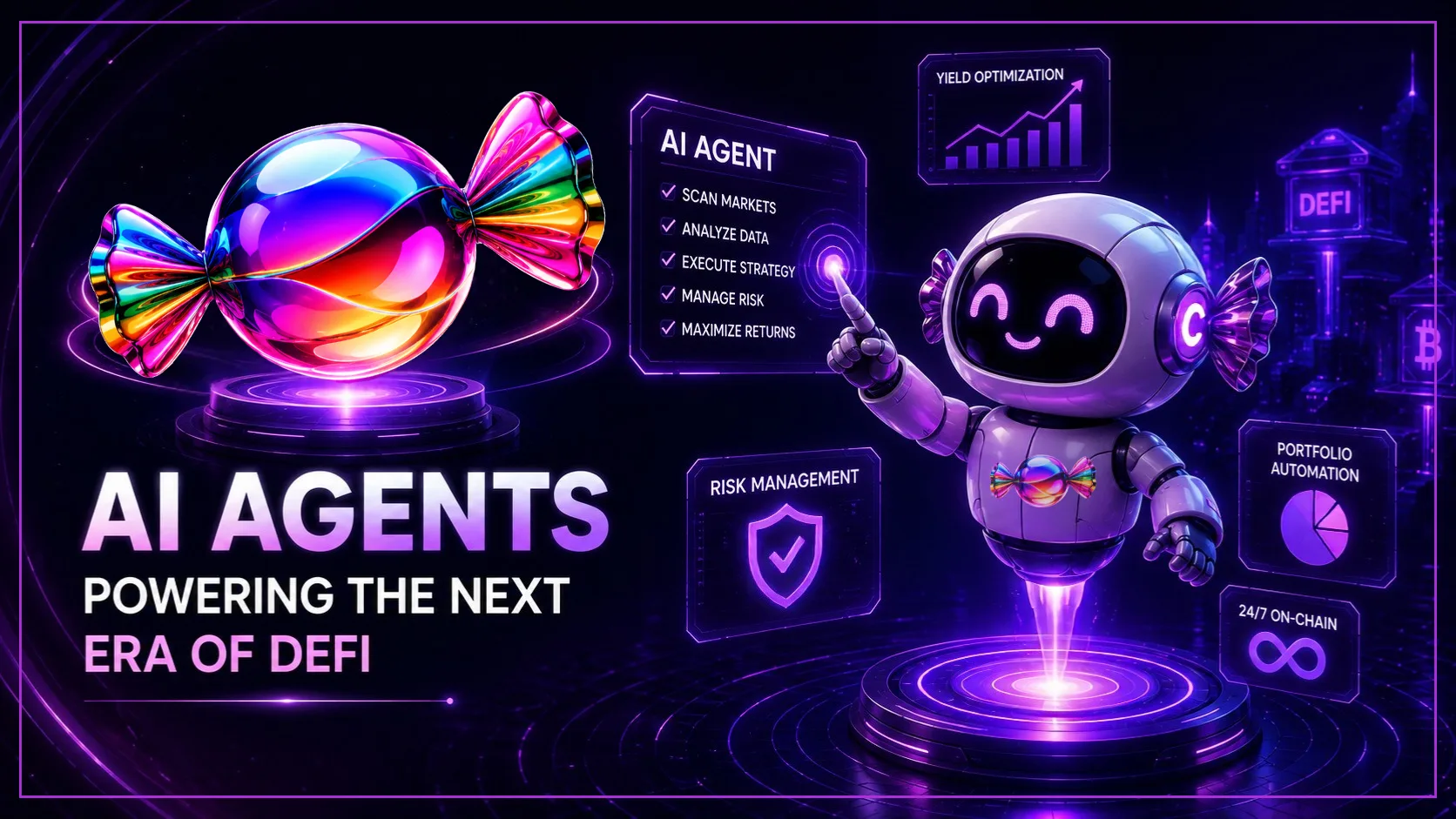
How AI Agents Are Revolutionizing DeFi and Web3 Automation
Market Context
The growth of these agents is tied to broader market trends in automated yield generation. Understanding the current state of the underlying assets is essential for evaluating the safety and potential returns of AI-driven strategies.
Feature Comparison
The following table highlights the key differences between these agents, focusing on their chain support, autonomy level, and cost models.
| Agent | Chain Support | Autonomy Level | Cost Model |
|---|---|---|---|
| Defi Pilot | Multi-chain | Assisted | Subscription |
| DeFi Copilot (Stellar) | Stellar | High | Pay-per-decision |
| Staxiq AI Copilot | Bitcoin/EVM | Advisory | Free/Freemium |
Automating yield farming with agents
A DeFi AI copilot removes the friction from yield farming by executing complex strategies without constant user intervention. Instead of manually monitoring liquidity pools or moving funds between protocols to chase higher returns, the agent handles the heavy lifting. It identifies opportunities, executes trades, and manages positions based on pre-set parameters or real-time market conditions.
This automation primarily targets rebalancing and compounding. Rebalancing ensures that your assets remain aligned with your risk profile as market prices shift. Compounding automatically reinvests earned yield to accelerate growth. Without an agent, these tasks require frequent manual transactions, which incur gas fees and expose the user to timing risks. The agent acts as a tireless operator, optimizing for efficiency rather than just yield magnitude.
The efficiency gain is measurable in both time and capital retention. By minimizing the window between opportunity identification and execution, the copilot captures fleeting yield spreads that human traders often miss. Automated rebalancing prevents portfolio drift, ensuring that a single volatile asset does not disproportionately skew the overall risk exposure.
While the technology simplifies participation, it does not eliminate smart contract risk. The agent itself is a software entity that interacts with on-chain protocols. If an underlying protocol is exploited or the agent’s logic contains a flaw, funds can still be lost. Therefore, understanding the specific strategy the copilot employs is essential before allocating capital.


As an Amazon Associate, we may earn from qualifying purchases.
Risk management and smart contract auditing
A DeFi AI copilot acts as a continuous security layer, bridging the gap between complex code and human oversight. Unlike static audit reports that become outdated upon deployment, these agents monitor smart contracts in real time. They analyze transaction patterns and contract states to identify vulnerabilities before a user interacts with a protocol, effectively reducing the attack surface for exploits.
The primary mechanism for this protection is automated anomaly detection. The copilot scans for irregularities such as unexpected token transfers, unusual gas consumption, or deviations from standard contract behavior. By establishing a baseline of normal activity, the AI can flag potential reentrancy attacks, oracle manipulations, or logic errors that human auditors might miss in high-speed environments. This proactive stance shifts security from reactive post-mortems to preventive intervention.
While AI enhances security, it does not eliminate the need for traditional due diligence. Regulatory bodies and independent security firms still play a critical role in establishing trust. However, for the everyday user, a DeFi AI copilot provides the technical depth required to manage high-stakes decentralized finance safely.
Setting up your first crypto automation tool
Before connecting any DeFi AI copilot to your wallet, treat the integration like handing over a spare key with strict access rules. Most platforms operate on a permission-based model, meaning you control exactly how much capital the agent can touch and which protocols it can interact with.
1. Connect via Official Extensions
Install the copilot’s browser extension or mobile app directly from the developer’s verified source. Never download from third-party mirrors. When linking your wallet, select the "Read-Only" or "Limited Permission" mode if available. This ensures the AI can view your portfolio performance without having immediate authority to move funds.
2. Define Strict Spending Limits
Set a daily or transactional cap on the AI agent’s authority. For example, limit the copilot to managing only 10-20% of your total stablecoin holdings. This creates a safety buffer; if the agent encounters a bug or a market anomaly, your core assets remain untouched. Always review the specific permission scopes before signing the initial transaction.
3. Test with Minimal Capital
Run the copilot in a sandbox environment or with a negligible amount of capital for the first 48 hours. Observe how it handles slippage, gas fees, and smart contract interactions. If the tool offers a "dry run" or simulation feature, use it to verify that the AI’s proposed trades align with your stated risk parameters.
4. Monitor and Revoke Permissions
Regularly audit your active permissions through your wallet’s security dashboard. Disconnect the AI copilot when you are not actively using it. If you suspect any unusual activity, revoke access immediately. Maintaining control over these keys is the most effective way to mitigate smart contract risks inherent in DeFi automation.
Common questions about DeFi AI copilots
The intersection of artificial intelligence and decentralized finance (DeFi) creates a complex landscape for investors. AI copilots automate trading, yield farming, and risk management, but they also introduce new layers of technical and security considerations.
No comments yet. Be the first to share your thoughts!